
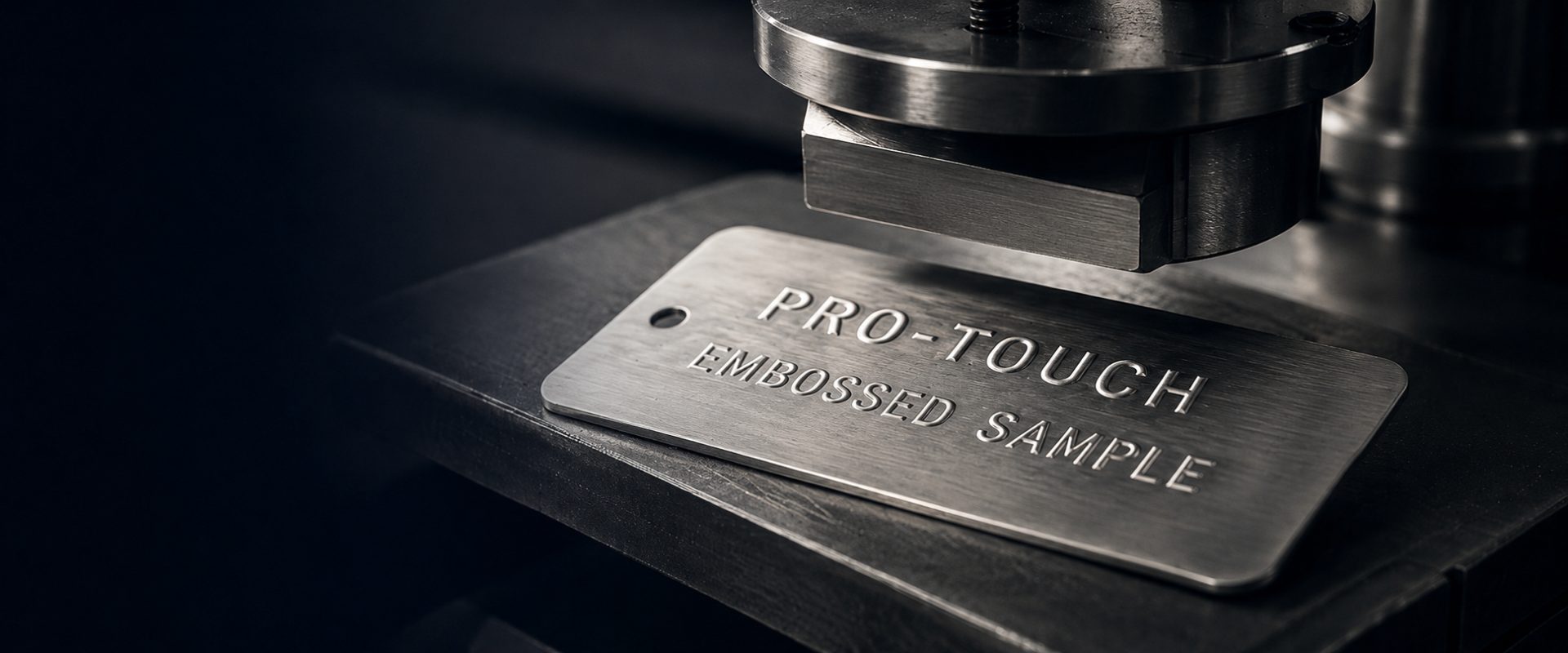
Embossing
Raised-character metal tags for durable identification, including brass tags, stainless cable tags, and custom aluminum or brass pieces where the material and format are suitable.
Request Embossed TagsRaised characters pressed into metal tags.
For Pro-Touch, embossing mainly means raised-character metal tags: brass tags, stainless steel cable tags, and suitable custom aluminum or brass pieces. The result is tactile, easy to read, and durable, but the process has stricter limits than engraving or laser marking.
Raised characters
Embossing forms the text upward from the metal instead of cutting or printing the surface.
Industrial ID
Useful for cable, conduit, valve, equipment, and field identification where durability matters.
Simple layouts
Best for straightforward text, numbering, and repeatable tag formats.
Odd sizes and parts
Non-standard parts need a material and thickness check before we can confirm the process.
When embossing fits
Choose embossing when raised text is the actual requirement.
A traditional raised-text option for durable tags where the layout can stay simple.
A strong choice for cable, conduit, and field marking where printed labels are not enough.
Sequential numbers, equipment IDs, line IDs, and consistent tag formats work better than complex one-off artwork.
Raised metal characters remain legible without ink, vinyl, or surface print that can wear away.
Embossed tags
Where raised characters get used most

Process limits
Embossing is durable, but it is not as flexible as engraving.
The embossing process depends on material thickness, tag size, character height, and the way the metal forms. It is not the right process for tiny text, detailed logos, unusual fonts, or artwork that needs fine line control.
Text size
Embossed characters need enough height and spacing to form cleanly and remain readable.
Material thickness
Too thick, too hard, or unsuitable material may not emboss cleanly or may need another marking process.
Layout simplicity
Straightforward text and numbering work best. Detailed artwork usually belongs with engraving, printing, or laser marking.
Embossing vs other processes
The best tag is the one marked the right way for the job.
Embossing
Raised characters with no ink or surface coating. Best when tactile, permanent text is the priority.
Rotary engraving
Better for more flexible text, logos, fill colours, and a wider range of sizes or layouts.
Laser marking
Good for fine detail, serialization, barcodes, anodized aluminum, stainless marking, and cleaner small text.
What to send for a quote
Embossed tags are easiest to price when the physical details are clear
Tag material and size
Tell us brass, stainless, aluminum, or customer-supplied material, plus thickness if known.
Text and quantity
Send the exact text, sequence, numbering, or spreadsheet, along with total quantity and repeat requirements.
Mounting details
Holes, slots, wire, chain, cable ties, rounded corners, and attachment method affect the finished tag.
Process limits
Know what raised metal text can and cannot do.
Short answers before you order embossed tags.
Sometimes. The material, thickness, shape, and desired text need to be reviewed before we can confirm.
Usually engraving or laser marking is better for logos. Embossing works best for simple raised text and numbering.
Not always. Embossing is best for raised tactile text; engraving is better when detail, flexible layout, or paint fill is needed.
Small text and detailed artwork are the usual limits. Embossing needs enough character height, spacing, and suitable metal thickness.