
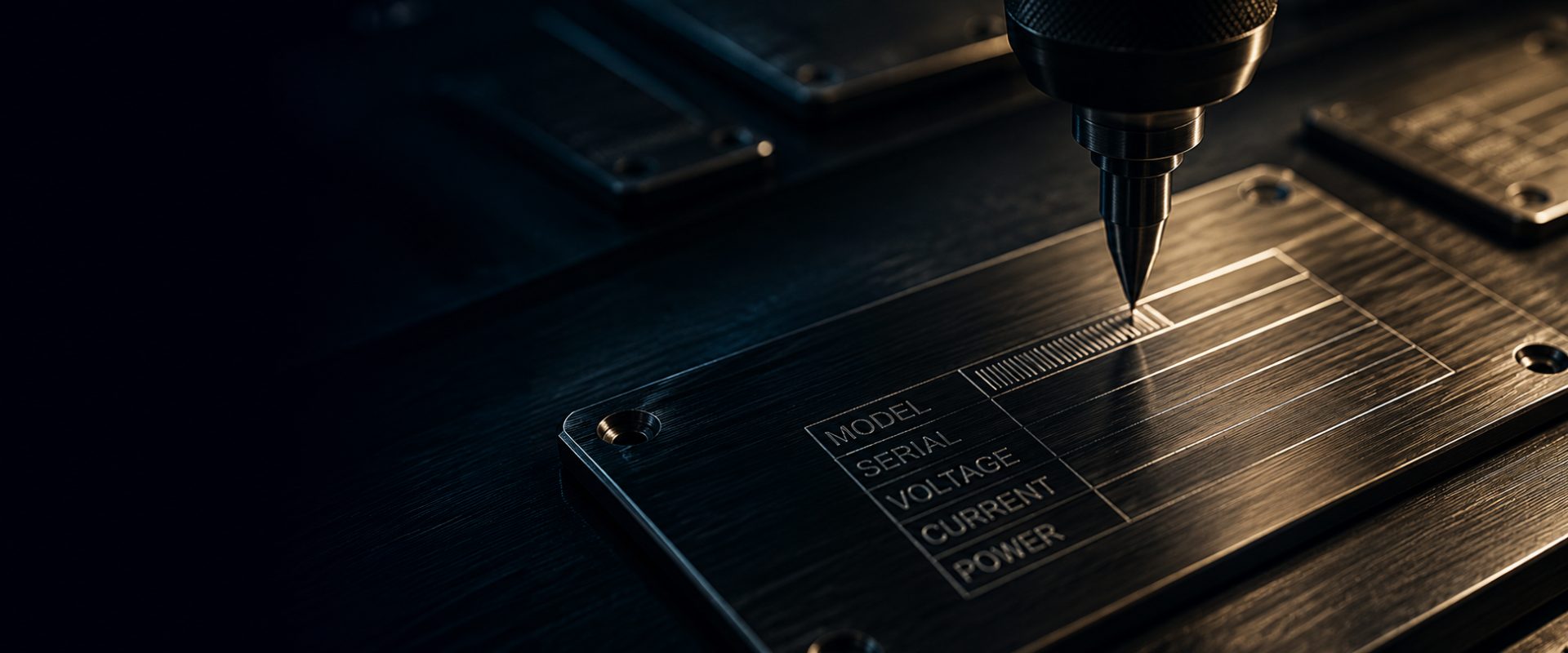
Professional Engraving Services
Rotary, scratch and laser engraving on tags, plates, nameplates, plaques and customer-supplied items.
Request a QuoteChoose engraving when the mark has to be cut into the material itself.
Engraving is used for identification, awards, plaques, nameplates, lamacoid tags, metal tags, control panels, and custom items where a permanent physical mark matters. The best process depends on the material: plastic may reveal a contrasting core, metal may need depth or paint fill, and customer-supplied pieces need review before we can guarantee a result.
Cut-in marking
Rotary engraving physically removes material, creating depth you can see and feel.
Contrast options
Lamacoid reveals its core colour; metal can be natural, paint-filled, or marked another way.
Repeatable ID
Tags, plates, labels, names, numbers, and equipment IDs can be produced consistently.
Your own items
Unknown coatings, odd shapes, glass, wood, tools, and customer-supplied items need approval first.
Choosing the engraving method
One logo, four ways to put it on a surface.
Good for lamacoid, brass, aluminum, stainless, nameplates, tags, plaques, and deeper cut marks.
An economical natural-metal mark for trophy plates, simple text, serial numbers, and lighter-duty identification.
Adds contrast to deeper metal engraving where the material, detail, and environment are suitable.
Better for some coated drinkware, fine detail, small text, barcodes, stainless marking, or materials that do not rotary engrave well.
Engraved products
Tags, plates, nameplates and one-off pieces
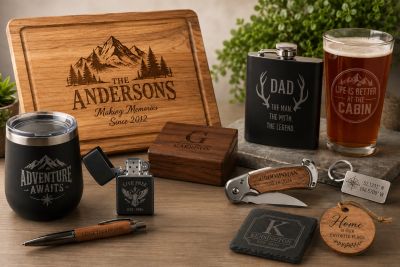
Custom Engraving & Etching
Custom engraving and etching on customer-supplied or in-house materials.

Lamacoid Tags & Signs
Engraved lamacoid tags and signs for equipment, valves, rooms, warnings, directions, and facility management.

Nameplates
Professional nameplates in various materials for any application
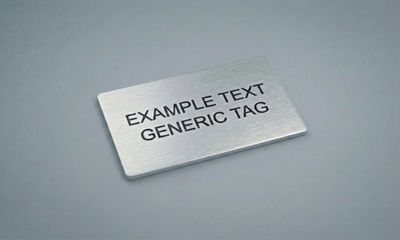
Brushed Aluminum Tags - Rotary Engraved
Deep rotary engraved with paint fill options
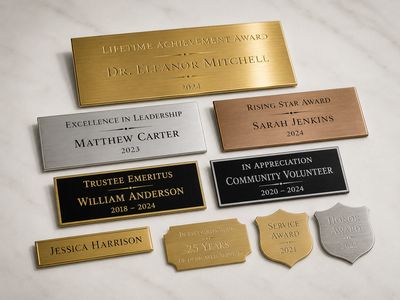
Trophy Plates
Custom trophy and award plates in brass or aluminum
Plastic, metal or your own item
The material decides what “engraved” will actually look like.
A lamacoid tag, a brass tag, a stainless plate, a powder-coated tumbler, a glass and a piece of wood all react differently under a cutter or a laser. Some engrave cleanly, some are better laser marked, and some customer-supplied items cannot be guaranteed.
Plastic / lamacoid
Engraving removes the top layer to reveal the core colour, which is why material colour choice matters.
Metal tags and plates
Rotary engraving can add depth; paint fill may improve contrast where the layout and use allow it.
Customer-supplied items
Coatings, curves, unknown alloys, glass quality, and surface condition can affect the result.
What we'll ask before engraving
Small production choices can change the finished mark.
Text size and detail
Very small text, thin lines, and detailed logos may need simplified artwork or a different process.
Depth and fill
Deep engraving, hatch filling, and paint fill take more setup than a simple scratch-engraved plate.
Quantity and repeatability
One custom item, a batch of serialized tags, and a repeat nameplate order are quoted differently.
Artwork and setup
Engraving rewards clean, simple, production-ready artwork
Line weight
Engraving cutters have a minimum width, so hairlines and very fine serifs may be thickened or simplified. Vector files (AI, EPS, SVG, PDF) make that quick.
Fonts and spacing matter
Engraving has tool sizes and legibility limits. Some fonts, tiny text, and tight spacing may need adjustment.
Proofs reduce surprises
For custom layouts, a proof confirms spelling, numbering, placement, material, size, and colour or fill choices before production.
Send us
The details that decide which engraving process we use
For tags, plates, and nameplates
Send material preference, size, thickness if known, quantity, exact text, numbering, hole or mounting needs, and whether paint fill is required.
For custom or customer-supplied items
Send photos, dimensions, material or coating details, desired mark location, quantity, and whether the item can be tested before the final piece is engraved.
Choosing the process
When depth, detail, and material change the engraving route.
Rotary or laser, fill or no fill, your item or ours: how we usually decide.
It depends. Rotary engraving is better when depth, tactile cut marks, or paint fill matter. Laser marking is better for some fine detail, coated items, and certain metals.
Often, yes, but they must be reviewed first. Unknown materials, coatings, glass quality, and surface condition can make results uncertain.
Sometimes. Paint fill works best with suitable engraving depth, layout, material, and use conditions. Very small details may not fill cleanly.
Usually. Photos, measurements, material details, font samples, hole placement, and an existing piece help us match it more closely.